Markham Commercial Metal Roof Coatings for Commercial Buildings
Enhance Performance: The Ultimate Guide to Metal Roof Coatings for Commercial Buildings
Metal roof coatings serve a vital function in boosting the resilience and service life of commercial rooftops. These coatings defend against environmental threats including UV rays and moisture, supporting lasting operational efficiency. Knowing the range of available options and their particular benefits is important. Moreover, understanding proper application procedures and maintenance strategies can heavily affect overall results. Yet, many property owners overlook key factors when selecting coatings, leading to costly mistakes. What should they consider to maximize their investment?
What Are Metal Roof Coatings and Why Should You Consider Them?
Metal roof coatings act as a defensive layer for commercial roofing structures, enhancing durability and longevity. These protective coatings, commonly made from materials like acrylic, silicone, or polyurethane, create a seamless barrier that guards against environmental elements such as moisture, UV rays, and extreme temperatures. Through the application of a metal roof coating, property owners can greatly reduce the likelihood of corrosion, rust, and leaks, that can compromise the structural integrity of the roof.
In addition, these protective coatings improve overall energy efficiency by deflecting sunlight, thereby cutting energy costs for cooling. The application process is fairly simple, often allowing for minimal disruption to daily business operations. Furthermore, metal roof coatings can increase the longevity of existing roofing systems, establishing them as a highly cost-effective option for ongoing maintenance needs. To conclude, metal roof coatings not only defend but also boost the total performance of commercial roof systems, positioning them as an critical factor for property management and maintenance strategies.
Major Benefits of Metal Roof Coatings for Long-Lasting Efficiency
Applying metal roof coatings brings numerous advantages that significantly improve both lifespan and effectiveness for commercial properties. An important benefit is the protection against external elements, such as wind, UV radiation, and rain, which can result in untimely damage. This protective layer aids in lengthening the roof's service life, decreasing the requirement for routine repairs or replacements.
Moreover, metal roof coatings enhance energy efficiency by reflecting sunlight, thereby decreasing cooling costs. This sun-deflecting property aids in preserving a consistent indoor temperature, resulting in a more agreeable environment.
In addition, these protective coatings work to reduce the potential for rust and corrosion, continuously defending the overall stability of the roof. By closing minor leaks and openings, they enhance water resistance, preventing damage from moisture infiltration. In summary, the application of metal roof coatings not only guarantees durability but also promotes energy savings, rendering them a smart option for commercial building owners seeking longevity and operational efficiency.
Finding the Right Metal Roof Coating for Maximum Durability
Picking the ideal coating for your metal roof is crucial for optimizing durability and effectiveness. Various considerations affect this determination, including environmental conditions, roofing angle, and particular structural requirements. Premium coating options, such as acrylic, silicone, or polyurethane, offer unique advantages. Silicone-based coatings provide excellent protection against UV rays and moisture, making them the top choice for areas with heavy rainfall. Acrylic-based coatings are valued for their energy efficiency and reflectivity, which can reduce cooling costs. Polyurethane-based solutions deliver outstanding resistance to wear and durability, ideal for heavily trafficked surfaces.
Moreover, thorough surface preparation is critical for adhesion and long-lasting performance. One should consider selecting coatings with a proven track record in commercial roofing applications. Ensuring compatibility with existing roofing materials will also improve the longevity of the roofing structure. At the end of the day, the best choice will align with specific environmental demands and performance expectations, ensuring a durable, cost-effective solution for professional commercial metal roofing applications.
Metal Roof Coatings Compared: Which Type Is Right for You?
When evaluating a coating for your metal roof, knowing the key differences between acrylic and silicone options is crucial. Acrylic coatings stand out for their budget-friendly nature and straightforward application, while silicone coatings deliver enhanced durability and excellent protection against moisture. Evaluating these characteristics can help determine the best fit for specific roofing needs.
Advantages of Acrylic Coatings
Acrylic coatings provide numerous advantages that make them a popular choice for commercial metal roofs. A key advantage is their excellent UV resistance, which works to preserve the roof's integrity and appearance over time. These coatings are water-based, making them green-conscious and straightforward to apply. Additionally, acrylic coatings are exceptionally flexible, permitting them to flex with changing temperatures without breaking down. Their cost-effectiveness adds to their popularity, providing effective protection without breaking the budget. Beyond that, acrylic coatings are offered in a wide range of colors, allowing property owners to improve appearance while ensuring functional performance. Overall, these features position acrylic coatings as a trusted solution for those looking for long-lasting and effective metal roofing solutions.
Advantages of Silicone Coatings
Numerous benefits make silicone coatings an excellent choice for commercial metallic roof structures. Such coatings offer superior resistance to UV radiation and extreme weather conditions, enhancing the roof's longevity. Their inherent flexibility permits effective expansion and contraction, reducing the likelihood of cracks forming. Furthermore, silicone coatings are highly reflective, supporting energy savings through lower cooling expenses. They also feature excellent adhesion properties, ensuring a secure bond with the metal surface. Furthermore, silicone coatings are highly effective against mold and mildew growth, thereby improving indoor air quality. Care comprehensive article and maintenance become straightforward, as they can be cleaned and recoated with ease. In summary, silicone coatings present a reliable and budget-friendly approach for protecting commercial metal roofs against environmental challenges.
How to Apply Roof Coatings
Implementing roof coatings entails multiple important stages to secure long-lasting performance and efficiency. Initially, thorough surface preparation is necessary to accomplish maximum adhesion, and then followed with targeted application procedures that optimize coverage. Finally, understanding the curing and drying process is vital for the lasting performance of the coating.
Surface Preparation Fundamentals
Proper surface preparation is critical to ensuring the effective application of roof coatings. The process commences with a detailed inspection to detect any damage, corrosion, or debris present on the metal roof. Thoroughly cleaning the surface is crucial; utilizing a pressure washer or proper cleaning solution clears away dirt, grease, and previous coatings that might reduce adhesion. Following the cleaning process, the roof should be left to dry entirely. Next, addressing any rust spots with a suitable rust-inhibiting primer helps prevent future deterioration. Moreover, addressing repairs to seams or flashing should be completed to secure a smooth and uniform surface. Ultimately, verifying that the surface is clear of moisture and contaminants will extend the lifespan and effectiveness of the applied roof coatings.
Summary of Application Techniques
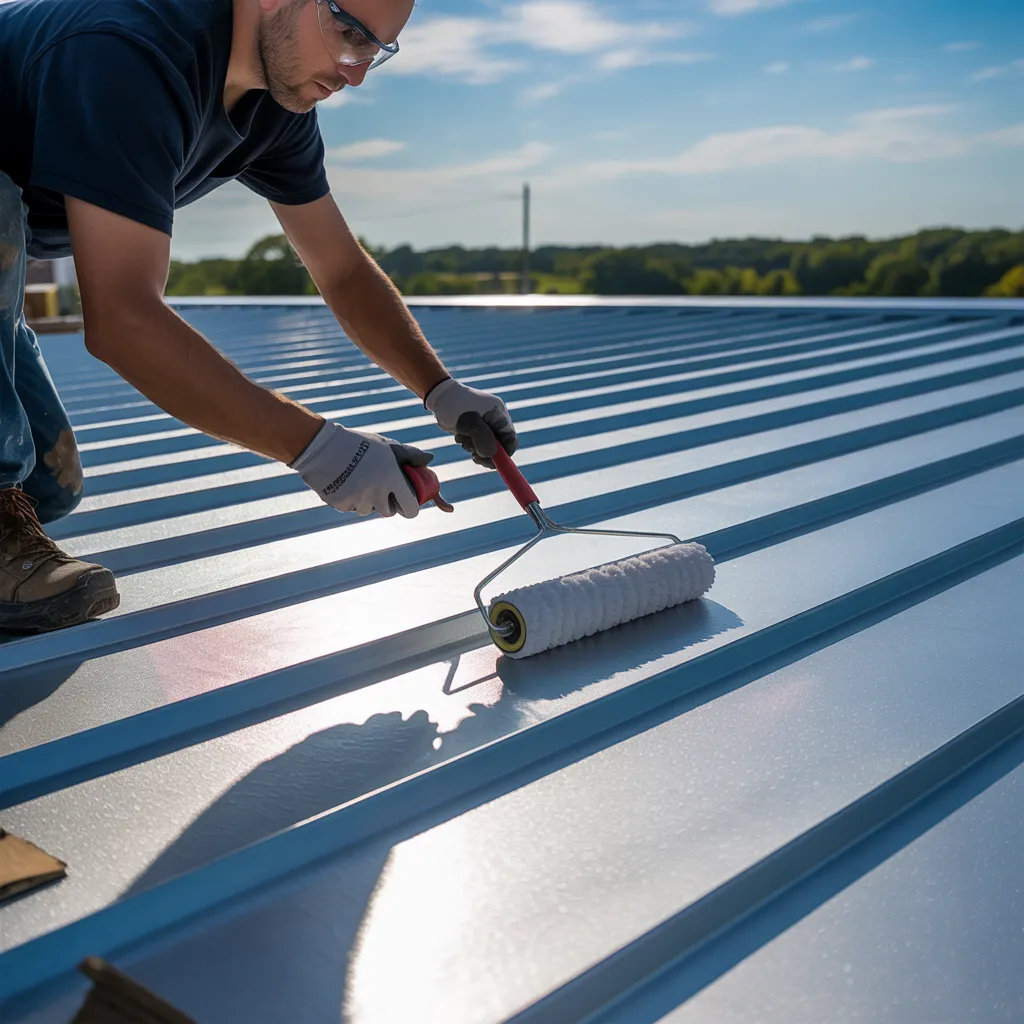
Successfully performing the application of roof coatings requires a systematic approach to secure peak performance and longevity. To begin, make sure the surface is clean, dry, and free of contaminants, as this promotes adhesion. Next, choose the appropriate coating type based on the particular requirements of the metal roof. It is advisable to use a primer if necessary, strengthening the bonding process. When putting on the coating, use even strokes with a roller, brush, or sprayer, making sure the coating is evenly distributed. Pay special attention to seams and edges, where water infiltration is most likely. Multiple thin coats are generally recommended over a single thick coat, as they enable improved bonding and proper drying. Finally, confirm that all safety guidelines are adhered to throughout the coating process.
Curing and Drying Procedure
Curing and drying are critical phases in the process of applying roof coatings, influencing both performance and durability. Throughout the curing stage, chemical interactions develop that attach the coating to the surface, strengthening adhesion and resilience to environmental conditions. This process commonly necessitates suitable temperature and humidity levels, which need to be tracked diligently to confirm thorough curing.
Drying, by comparison, involves the evaporation of solvents, permitting the application to harden. Variables such as air circulation, thickness of application, and surrounding conditions can considerably affect drying time. It is crucial to prevent moisture exposure or foot traffic during each stage to prevent defects. Observing manufacturer guidelines assures the durability and performance of the roofing coating.
Maintenance Tips to Extend Your Metal Roof Coating's Life
Preserving a metal roof coating is crucial for extending its durability and effectiveness. Periodic inspections serve a critical purpose; property owners should watch for evidence of damage, such as discoloration, peeling, or cracking. Cleaning the surface periodically helps avoid the accumulation of dirt and debris, which can retain moisture and cause corrosion. Applying a soft brush or gentle pressure wash with mild detergent is suggested for proper cleaning while protecting the coating.